COREMechanical
Hoist & Trolley Replacement
Modern wire-rope hoist and trolley engineered to run on your existing girder — the single highest-impact upgrade.

Tell us your workshop conditions and get a tailored solution within 24 hours.
Get a Quote →

Give a sound crane another decade — without buying a new one. New hoist, controlsand safety systems fitted to your existing crane, any brand, worldwide.
One question decides most cases: does the steel structure pass survey? Girders and end carriages age slowly; hoists, trolleys and electrics age fast. Replace what ages — keep what lasts.
| Your situation | Verdict |
|---|---|
| Structure sound; hoist, trolley or controls aging, parts hard to source | Modernize — replace the working components |
| Frequent electrical faults, contactor-era controls, no VFD | Modernize — electrical & control package |
| New safety or compliance requirements (limiters, monitoring) | Modernize — safety package |
| Need somewhat more capacity or duty | Assess — uprating is sometimes possible after structural verification |
| Girders corroded, cracked or undersized for the duty | Replace — we'll say so honestly; see the new-crane inquiry guide |
Typical modernization scope — combined per project after assessment.
Modern wire-rope hoist and trolley engineered to run on your existing girder — the single highest-impact upgrade.
New panel, variable-frequency drives, radio control — smooth motion, fewer faults, parts you can actually buy.
Overload limiters, limit switches, warning systems and condition monitoring — meet today's rules on yesterday's crane.
Electronic anti-sway and smarter speed control — faster, calmer load handling without touching the structure.
New wheels and end trucks cure rail gnawing; modern conductor systems end festoon failures.
New cab, seat, HVAC and visibility — the cheapest productivity upgrade on a long-shift crane.
We modernize other manufacturers' cranes as standard practice. From your nameplate, measurements, photos and a running video, our engineers verify the interfaces and supply a retrofit kit engineered to fit your girder and runway — not a catalog assumption. The Saudi Arabia job below is exactly that case: their crane, our hoist.
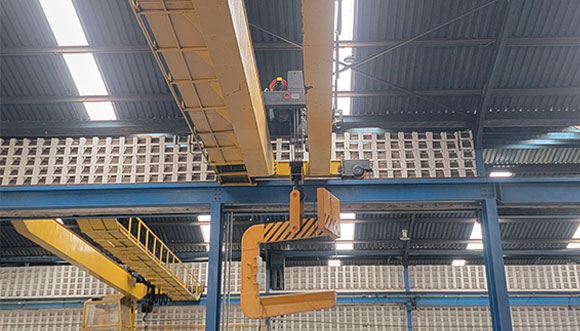
Three modernization programs from the last five years — European girders re-powered, a 24-hour steel plant converted crane by crane, and one job run in reverse: a crane built around the customer's own hoist.
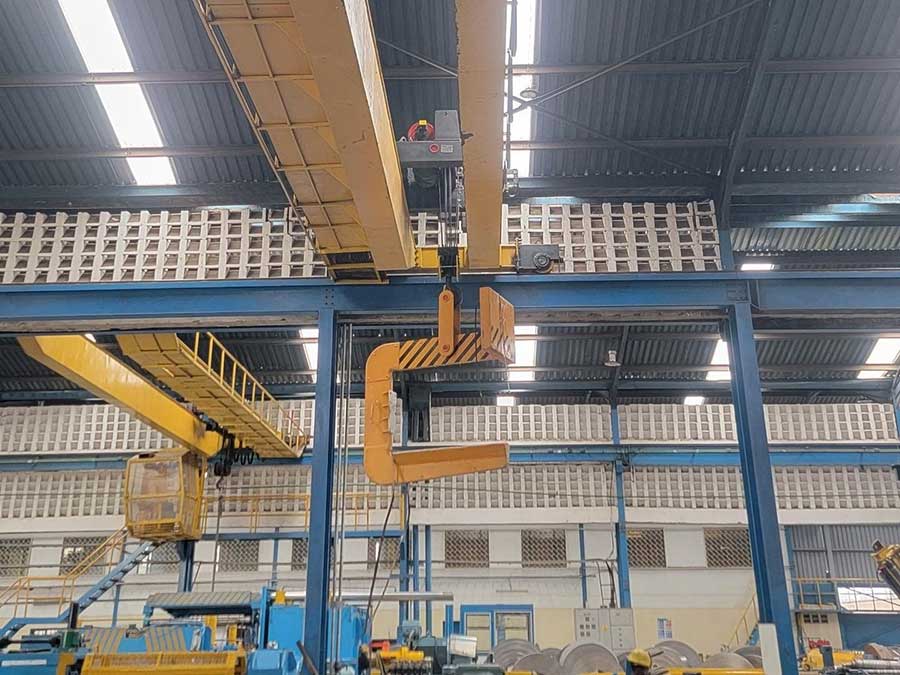
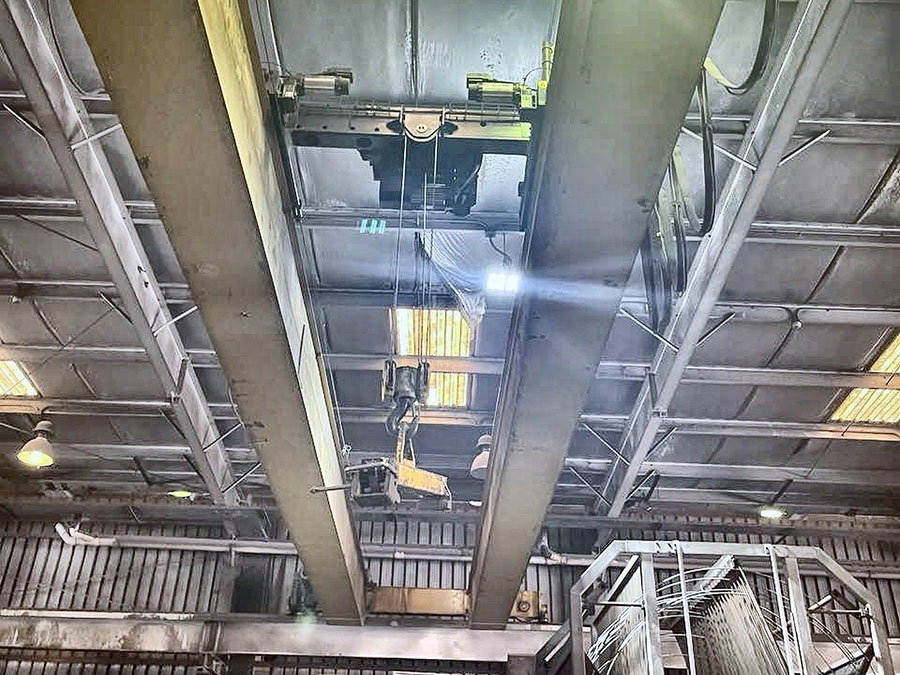
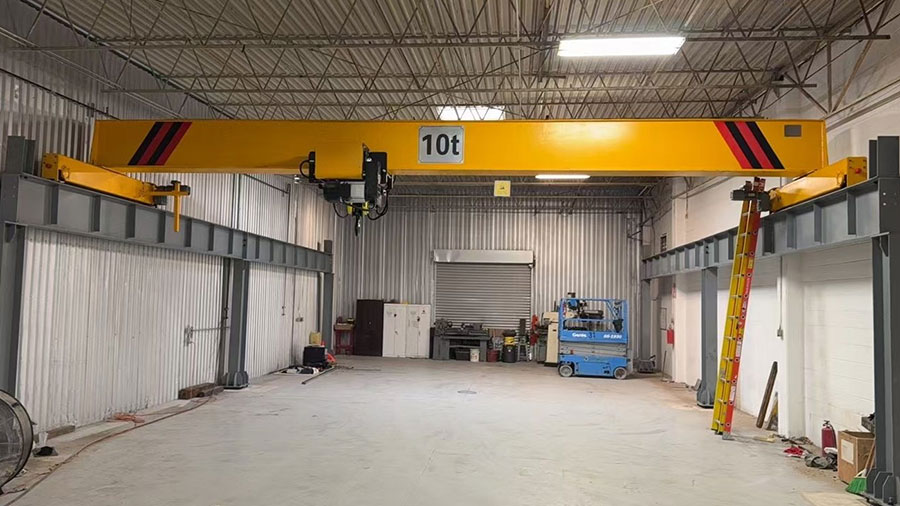
Most retrofits start with one component and grow from there. Full component range: crane parts & retrofit kits →
Send the nameplate, photos and a short video of the crane running. Our engineers assess structure, mechanisms and electrics and tell you honestly: modernize, or replace.
Itemized scope, drawings and schedule. The kit ships as a complete package — components, fixings, cabling and documentation — packed to the same export standard as our cranes.
Your team installs with free live video guidance from our mechanical and electrical engineers — or we dispatch an engineer to site to supervise or lead the work. Most component retrofits are installed in days, not weeks.
No-load runs, rated-load test, checks against the acceptance sheet — then documentation, spare-parts list and warranty for the new components.
Yes — that's the normal case, not the exception. The retrofit kit is engineered from your crane's actual measurements and interfaces, whoever built it.
The nameplate (or whatever remains of it), overall photos, close-ups of hoist, trolley and panel, key dimensions we'll guide you to measure, and a short video of the crane running. That's enough for the free assessment.
Sometimes — but only after structural verification. If the girder calculation supports it, moderate uprating is possible; if not, we'll tell you plainly and show the numbers.
Cost is itemized after assessment — typically a fraction of a replacement crane, since the structure, runway and building stay untouched. Kit production takes weeks; installation of most component packages takes days.
Send the nameplate, a few photos and a short video — our engineers reply within 24 hours with an honest verdict: modernize, or replace.
TO TOP