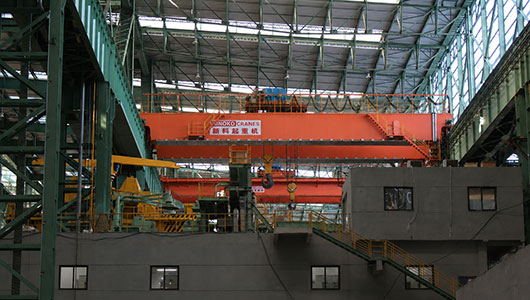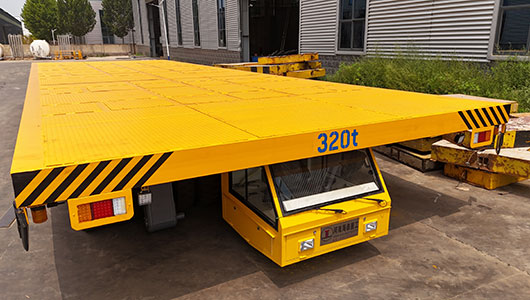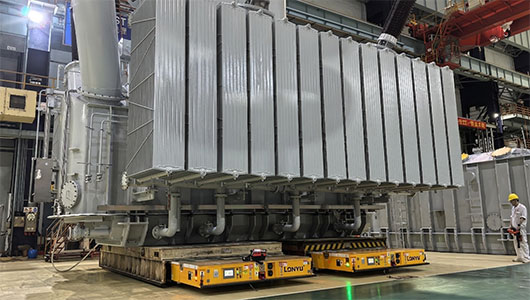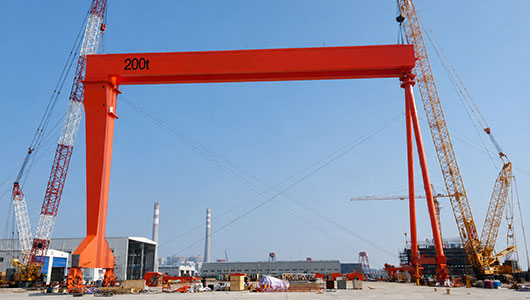
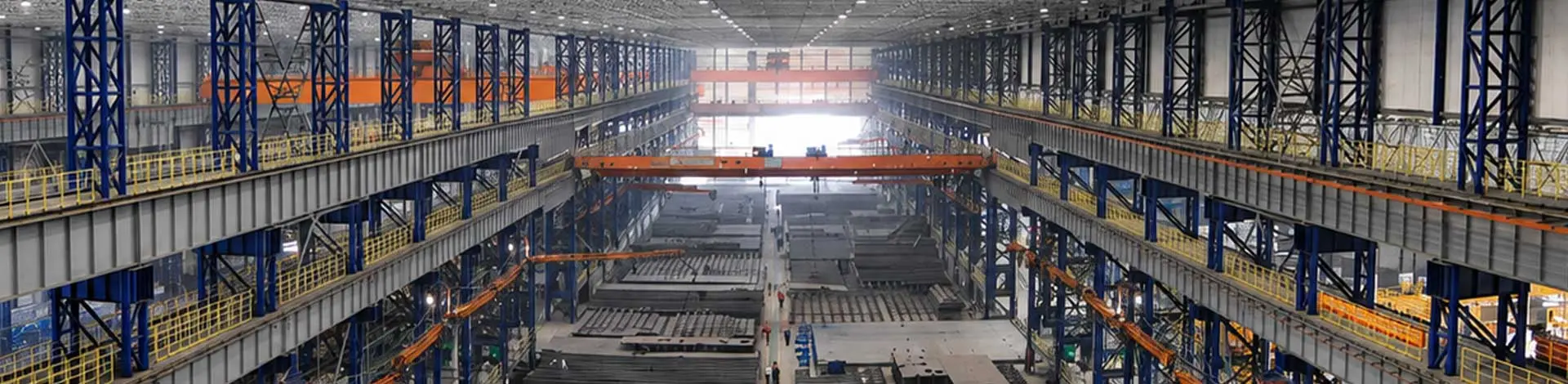
More modular hulls mean fewer, larger sections — 50 t to 1,000 t and beyond. Capacity, span and hook height climb; so does the ground-transport class underneath them.

Tell us your workshop conditions and get a tailored solution within 24 hours.
Get a Quote →
Shipbuilding is discrete, heavy and schedule-driven. The material handling has to keep the whole yard moving to the launch date — which is why lifting and ground transport have to be engineered together, not bought separately.
More modular hulls mean fewer, larger sections — 50 t to 1,000 t and beyond. Capacity, span and hook height climb; so does the ground-transport class underneath them.
A block is craned onto a transporter, driven across the yard, then craned into grand assembly. If lifting and transport aren't planned as one system, the handoffs are where schedule is lost.
Every move is on the critical path to launch. Reliability, redundancy and fault-tolerant control aren't extras — they protect the schedule the whole yard runs on.
Salt air, wind load, open yards and long runs. Coatings, sealing, wind design and duty classes are specified from the yard's real conditions, not a catalogue default.
| Shipyard stage | Overhead lifting | Ground heavy transport |
|---|---|---|
| Steel intake & plate prep / cutting | Overhead cranes, magnet lifting | Rail / battery transfer carts |
| Sub-, mid- & grand block assembly | Overhead & gantry cranes, jib, magnet | Ship block transporters |
| Block storage & buffer yard | Yard gantry & rubber-tyred gantry (RTG) | Omnidirectional transport platforms |
| Grand assembly / mega-block join | High-capacity gantry cranes | Multi-vehicle synchronised transport |
| Building dock / berth & launch | Goliath (shipbuilding) gantry cranes | SPMT-class platforms into the dock |
| Quay outfitting | Jib & overhead cranes | Transporters for outfitting modules |

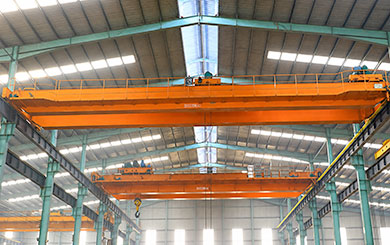
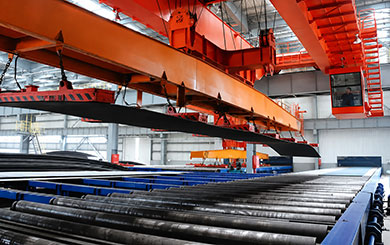
From plate prep and cutting through sub- and mid-assembly, the shop runs on overhead and gantry cranes with magnet and beam lifting for plate and structure.

Mill-hall cranes live for shutdown week: liner changes and motor swaps under a roof that was designed around the crane. Hook approaches, lifting height and crawl speeds are set from your mill layout drawings.

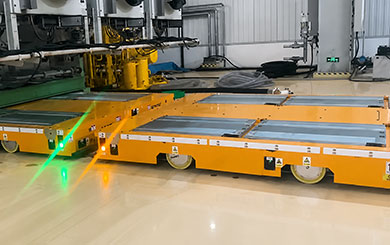
Joining blocks into mega-sections pushes weights past what one transporter carries. Two or more platforms run in master–slave synchronisation to move a single load with balanced steering, speed and braking.

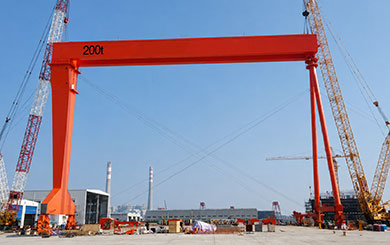
At the dock, high-capacity goliath gantry cranes set mega-blocks onto the ship; transporters deliver blocks and outfitting modules to the berth. Lifting and transport meet again — timed to the launch.

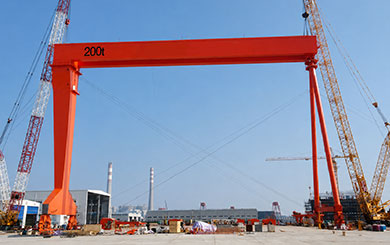
High-capacity, wide-span gantry cranes for grand assembly and the building dock, plus yard gantries for block storage.
Shipyard gantry cranes →

Single- and double-girder overhead cranes, jib cranes and electromagnet lifting for plate, structure and block assembly shops.
Overhead cranes →

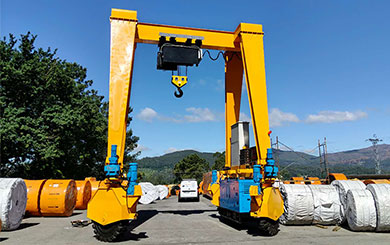
Rail-free gantry that steers and travels on tyres — moves between blocks, rows and yard areas with no fixed runway, for flexible block and container handling.
Rubber-tyred gantry →

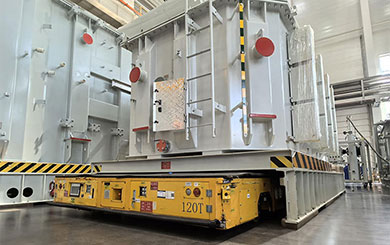
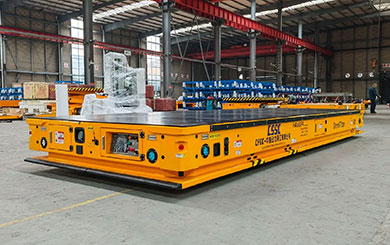
Self-propelled transporters, 100–500 t class, for moving hull blocks between shops, storage and assembly.
Heavy transporters →

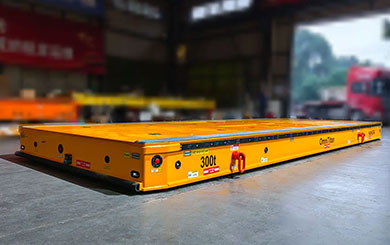
All-wheel steering platforms with independent suspension for tight yards — straight, crab, lateral and spin-in-place travel.
Ask for specs →

Two or more platforms in master–slave synchronisation to carry a single mega-block — balanced steering, speed and braking — with PLC positioning, obstacle avoidance, fault diagnosis and an interface path toward fleet dispatch.
Talk to engineering →
Kino Cranes designs and integrates intelligent heavy-transport systems in the 300–500 tonne class — delivered projects combining omnidirectional steering, independent suspension, dual-vehicle synchronisation, LiFePO₄+BMS power, obstacle avoidance and fault diagnosis. Project specifics available under NDA.
One partner for lifting, ground transport and control means the handoffs are engineered, not improvised.
Modernising or expanding an existing yard? You don’t have to buy it all at once.
Start from the heaviest single component you will ever put on the hook — typically the engine,transmission or truck tray — then add the lifting beam and rigging. Send us that number with your bay length, width and clear height, and we’ll return a sized configuration with drawings, free.
Yes — metallurgical configurations for ladle, charging, slag and scrap handling at A6–A8 duty,with heat-shielded trolleys, insulated rope drums and redundant braking on hot-metal lifts.Tell us the metal, the temperature and the cycle and we’ll spec accordingly.
Sealed drives, protected panels, hoists to IP65, enclosed conductor systems and coating systems matched to your site’s dust and humidity. Describe the environment in your inquiry — protection class is specified per order, not bolted on later.
Three ways: a critical-spares list is quoted with the crane so shutdowns aren’t waiting on sea freight; installation runs with free live video guidance or a dispatched engineer; and our engineers respond remotely first — most electrical and control issues are diagnosed from video before anyone books a flight.
Standard single girder cranes run about 4–6 weeks in production and double girder cranes about 8–10 weeks; metallurgical and custom heavy cranes are quoted per scope. Sea freight and installation planning come with the quotation, and every shipment leaves with photographed export packaging.

Independent suspension, dual-vehicle synchronisation, LiFePO₄+BMS, obstacle avoidance and fault diagnosis — the core of a 300–500 t class heavy-transport capability.

Wide-span gantry and double-girder overhead cranes engineered for outdoor, heavy-duty structural and block work.

Cranes, transfer transport and control delivered as one package for a heavy-industry plant — the same model a shipyard upgrade follows.
Leave Message
Please feel free to contact us!
TO TOP