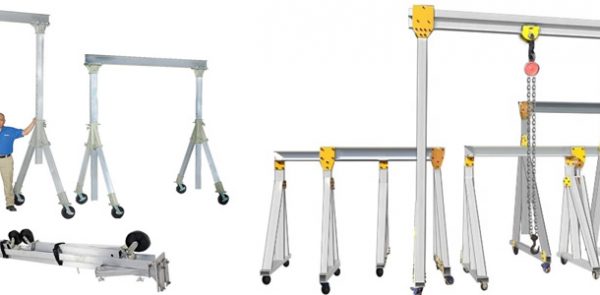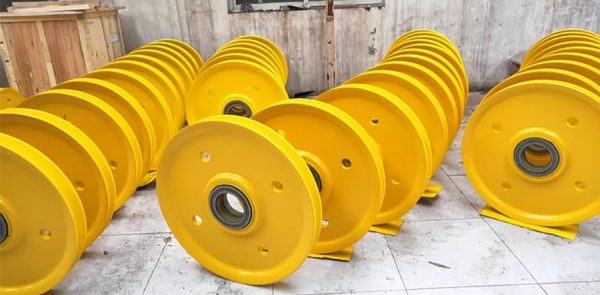

The question of whether to fully pack lubricating grease into crane cavities seems simple, but it actually involves the fundamental principles of equipment lubrication systems, the physical properties of grease, the machinery's operating load characteristics, and ambient temperature and humidity conditions. In hoisting machinery, grease is typically applied to spaces such as pulley bearings, drum bearings, open gear bearings, wheel block bearings, slewing rings, jib crane hinge point (sliding or rolling types), and gearbox bearings. Different application points have varying requirements for the degree of grease fill.
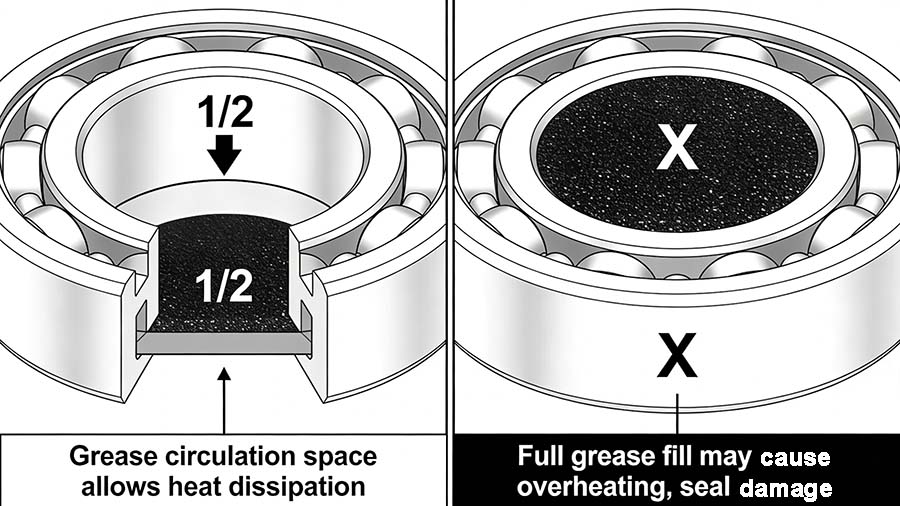
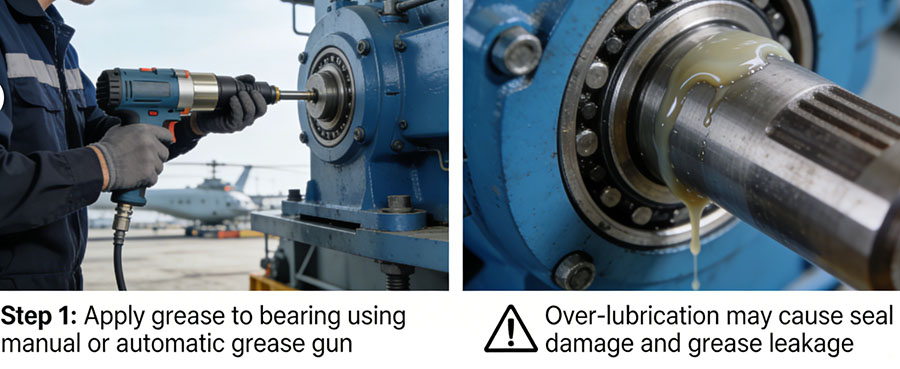
Bearing cavities do not necessarily need to be completely filled. In some crane parts, packing the entire cavity with grease can actually accelerate bearing failure. The main reasons are:
Therefore, bearing-type structures generally only need grease filling to about 1/3 to 1/2 of the cavity volume. The exact proportion depends on the load frequency, temperature, and working environment of the specific location.
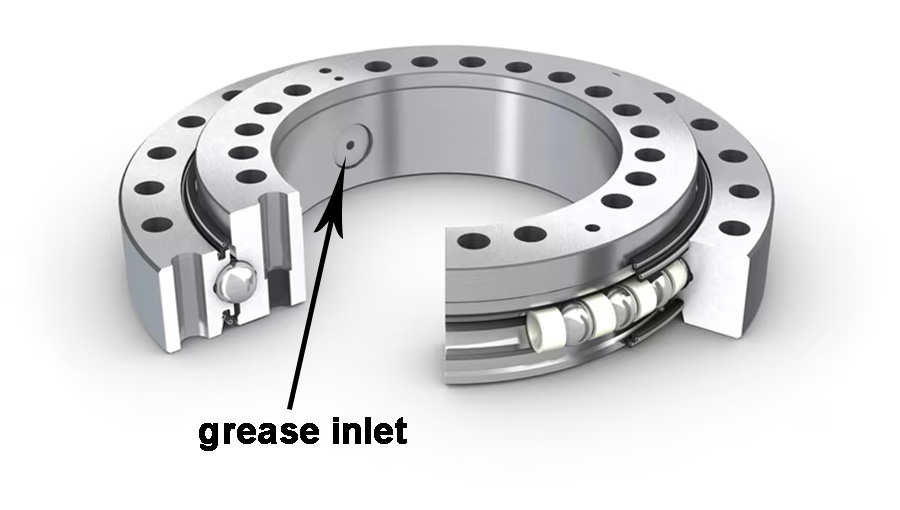
Not all structures should avoid full packing. Some cases do require the cavity to be completely filled. For example, in crane slewing ring raceways, periodic grease application must fill the raceway completely to push out old grease, preventing dust and moisture from entering and maintaining proper lubrication.
Some slow-moving or heavily loaded gear transmission devices with minimal relative speed difference, such as certain gear couplings, use grease instead of oil. In these cases, the cavity should be filled beyond half, even approaching full, to form a sufficiently thick lubrication layer, rather than for heat dissipation.
There are also some that can be filled completely. For instance, some areas that require concentrated lubrication. Since manual filling is time-consuming and labor-intensive, using concentrated lubrication can reduce the intensity of maintenance work. However, it should be noted that these concentrated lubrication points are all locations with relatively low rotational speeds and no heat dissipation requirements.
To decide whether to fully pack a cavity with grease, consider the following conditions:
Common lithium-based greases include grades 1#, 2#, and 3#, which differ primarily in viscosity and suitable applications.
On crane machinery, 2# lithium-based grease is the most widely applicable. For centralized lubrication systems, which typically have long pipelines with small internal diameters, 1# lithium-based grease is generally used. In cold environments, 1# grade or greases with even better fluidity are preferable. For conditions with high impact loads, extreme pressure (EP) or molybdenum disulfide (MoS2) type greases may be used. It should be noted that MoS2 greases are prone to settling and are not advised for high-speed bearing environments.
TO TOP