
A real-world case study: A 5-ton 31.5m single-beam crane in service for 12 years developed cracks at the main beam end (cracked location circled in blue in the photo below). This comprehensive guide analyzes the root causes and provides proven crane web crack repair solutions.
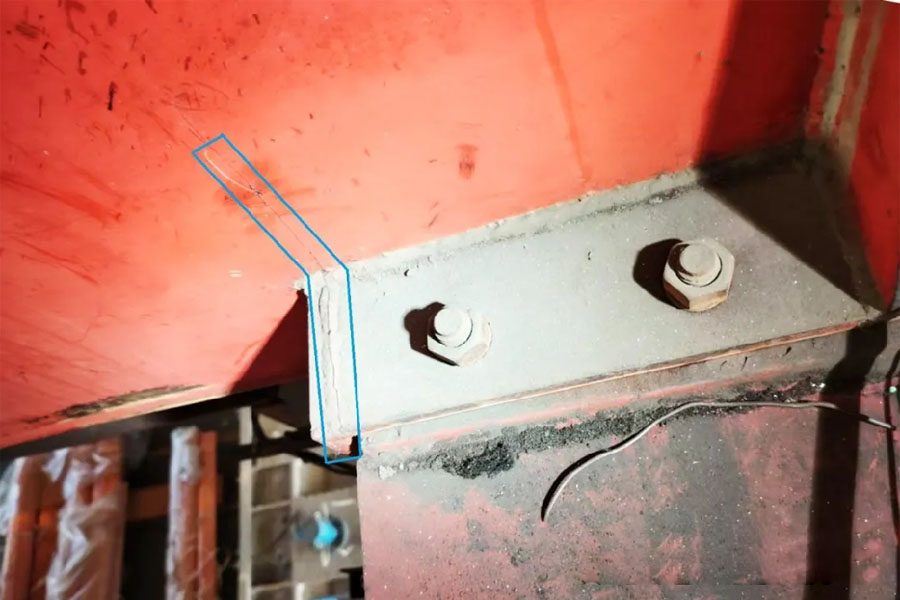
This type of failure is not uncommon—we've documented numerous similar cases. For this specific incident, the primary causes of crack formation include:
The ends of the main beam often adopt variable cross-section design to save materials while meeting the requirements of strength and stiffness, and to facilitate connection. However, the discontinuous geometry of the cross-section can lead to stress concentration, with local stress being much higher than other areas. Under the long-term action of load, it is prone to cause cracks. In addition, the folded corner area of the two planes at the connection point is also prone to stress concentration due to the structural sudden change, and the force transmission is difficult to be smooth. At the same time, it is difficult to fully consider fatigue strength, which may limit the deformation of the main beam and prevent the stress from being released, resulting in cracking.
Improper welding procedures—such as porosity, slag inclusion, incomplete penetration, and other defects—create stress concentration points that become crack initiation sites. Quality control is particularly challenging at complex weld locations, especially at right-angle corners in variable cross-sections where weld geometry is complicated.
Cranes endure prolonged dynamic loading. The combination of stress concentration and material fatigue effects at variable cross-sections makes these areas highly susceptible to fatigue cracks.
Additionally, impact loads from asynchronous crane travel mechanism operation or excessive rail joint gaps accelerate crack propagation.
When operators frequently load near one end beam, unequal resistance in travel mechanisms can cause asynchronous operation, introducing torsional loads that concentrate at cross-section mutations. Existing rail contact issues or "rail biting" phenomena further exacerbate these conditions.
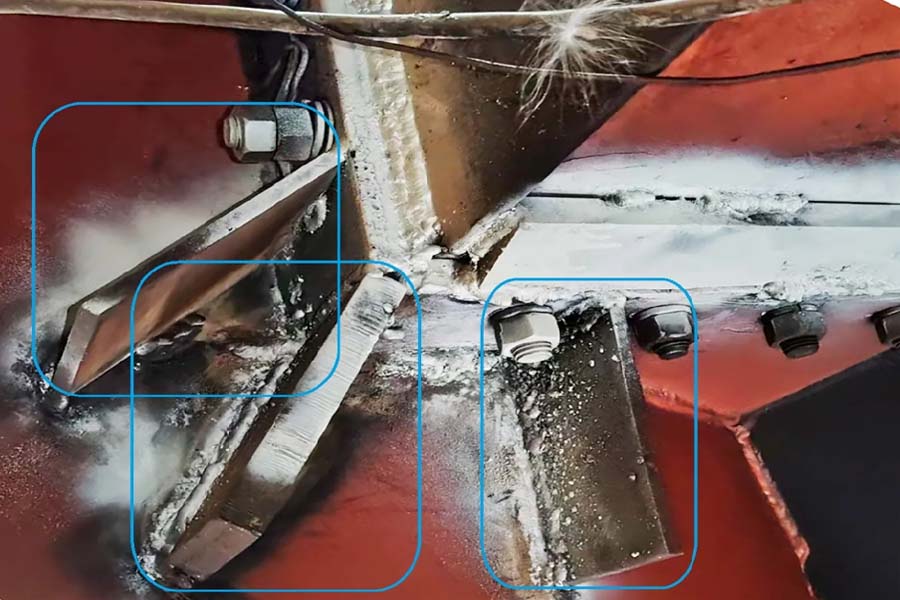
The problem with quick fixes: In this case, after cracks appeared, photos show reinforcement plates were added across cracks. This approach fails to address the underlying causes above and cannot prevent crack propagation. Even if temporarily serviceable, new cracks typically appear near the reinforcement plates after continued use.
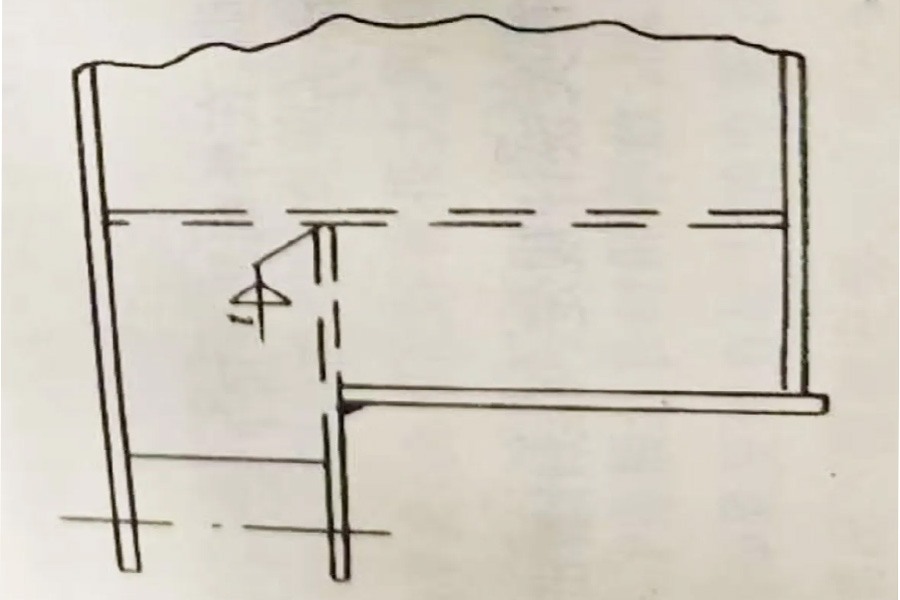
Some experts recommend modifying the joint connection structure—an equally valid approach:
⚠️ Critical Note: This connection method requires the horizontal plate to fully penetrate through the vertical plate—never reverse this orientation.
To minimize such issues, implement these measures across your equipment lifecycle:
Don't wait for small cracks to become catastrophic failures. Our certified crane inspectors provide comprehensive assessments and proven repair solutions.
Request a Free Inspection Quote
This technical case study is based on 12+ years of field experience with overhead crane maintenance and crane web crack repair. The methods described follow industry best practices and applicable safety standards.
Related Topics: Crane Sheave Failure | Crane Inverter Safety| Crane Quality & Process
Most likely due to these reasons: stress concentration at structural corners and holes; defects in the welding itself; fatigue caused by repeated lifting and lowering over a long period; and torsional stress caused by uneven loading and asynchronous movement of the crane. Over time, these factors can lead to cracking.
No. Just attaching a patch plate to the cracks does not solve the fundamental problem; the cracks will continue to expand. The correct approach is: first clean up the original welds, make stop cracks at the crack ends, thoroughly treat them, and then use a properly sized reinforcing plate in combination with proper welding techniques to repair them.
Just do these things regularly: design the structure to have smooth transitions, reducing stress concentration; strictly control the welding quality; conduct regular non-destructive testing as required; never overload; ensure the accuracy of track installation and synchronous operation, and don't let the equipment be subjected to uneven forces for a long time.
TO TOP