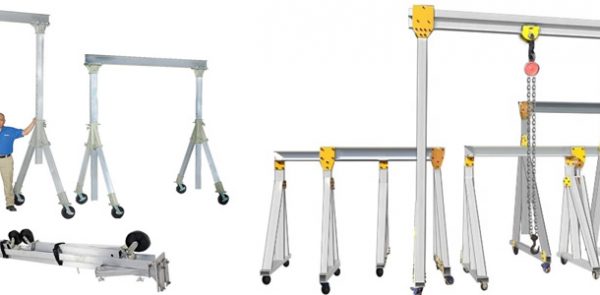

We are well acquainted with the characteristics and applications of full gantry cranes. However, the installation of such equipment often requires a significant amount of floor space. If the available area in the factory is already very limited, semi gantry crane can be a perfect fit for such scenarios.
Traditional gantry cranes need to reserve sufficient space on both sides for laying tracks and installing legs. In contrast, semi gantry cranes only require a space on one side for installing the tracks and legs, without occupying a large area of floor space. This is the core reason why many factories prefer to choose them.
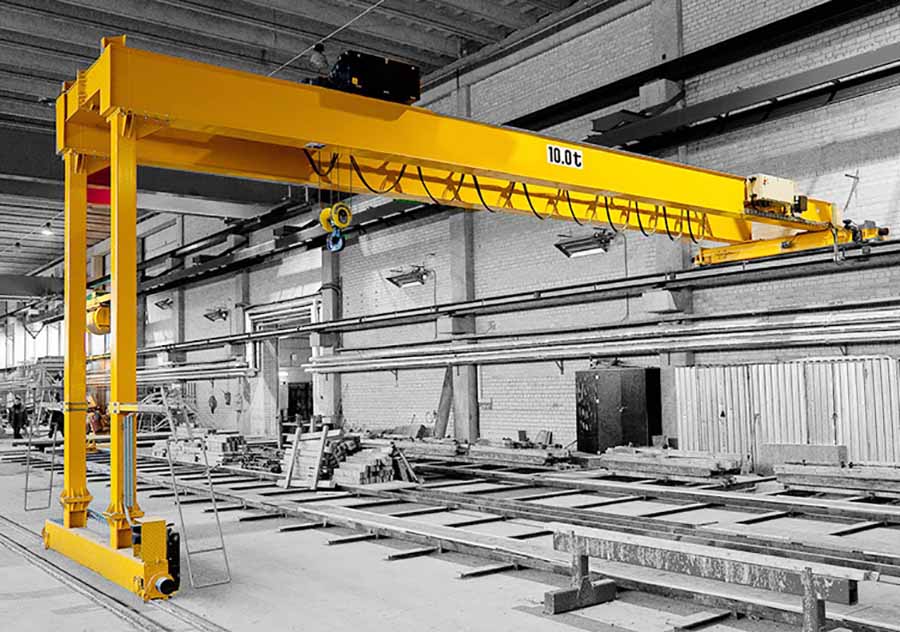
The semi gantry crane has distinct structural features. One of its legs is fixed to the main structure of the building, while the other leg directly contacts the ground to provide support. The main beam of the crane is placed between these two support points, and the hook can move horizontally on the main beam to complete various operations.
Among them, the legs with a wall-mounted design will directly transfer the equipment's own load to the building itself; while the ground-supported legs are securely connected to the ground through wheels or telescopic support arms. Such design characteristics enable the crane to operate flexibly in areas between walls or columns.
Different setups work for different sites:
Materials vary too. Aluminum is lightweight and is often used in scenarios with light loads; steel has high strength and can handle heavy loads. Some models combine aluminum and steel materials to achieve performance optimization. The types of electric hoists include electric chain type and wire rope type. The electric chain type is easy to operate, while the wire rope type is suitable for high-load operations.
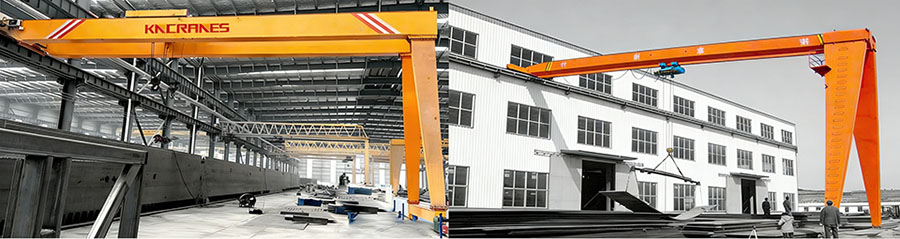
Semi gantry cranes come in standard sizes:
| Capacity | Span | Height Variation | Power Type |
|---|---|---|---|
| 1-3 ton | 3.05-7.62 m | 0-0.9 m | 110V/220V |
| 3-5 ton | 4.57-10.67 m | 0-1.2 m | 220V |
| 5-10 ton | 6.1-13.72 m | 0-1.5 m | 220V/380V |
| 10-15 ton | 7.62-16.76 m | 0-1.8 m | 380V/460V |
| 15-20 ton | 9.14-18.29 m | 0-1.82 m | 460V |
These cranes fit in several industries:
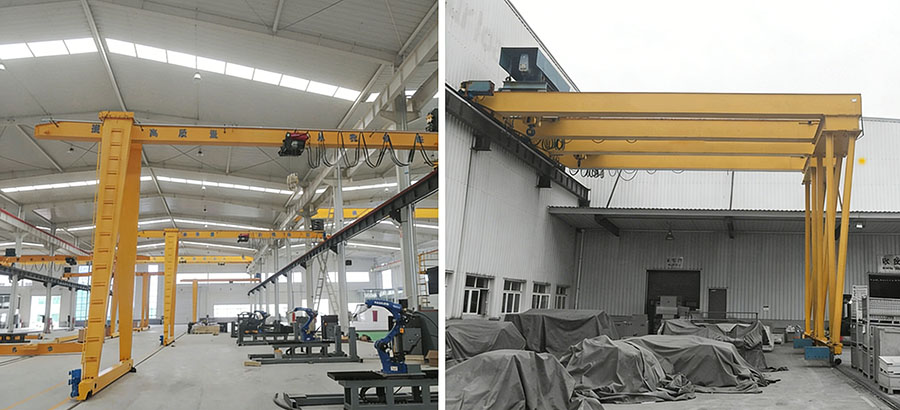
A semi gantry crane only needs one leg on the floor. Full gantries need two. This difference frees up 40-60% of the floor space that would otherwise be blocked. You can keep the center of your shop open for other work.
The wall-mounted leg sends the load straight into the building. No floor reinforcement needed on that side. Full gantries need strong floor support under both legs. If your building already has good walls or columns, a semi gantry takes advantage of what's there.
Semi gantry cranes typically cost 20-40% less than full gantries. Less material means lower manufacturing price. Installation also takes less time and labor. You may save on structural work too, since one side uses existing building support.
1. Capacity
Figure out your heaviest load. Add 25% as a safety margin. Check that the wall or column can handle this weight at the mounting point.
2. Span
Measure from the wall to where you need to reach. Leave room for the load to swing. Consider whether you need to cover multiple work areas.
3. Height
Match the wall support height to your lifting needs. Adjustable models work if your floor isn't level or if loads change.
4. Site Check
Make sure the wall can support the load. Check floor condition under the free leg. Look for overhead obstructions. Verify power access and installation space.
Semi gantry crane vs full gantry crane —what's the difference?
Semi gantries have one leg on the building and one on the floor. Full gantries have two floor legs. Semi gantries save space and use existing structure.
How do I know what capacity I need?
Calculate your maximum load weight, then add 25% for safety. Also verify the building and floor can support it.
Can I mount a semi gantry on any wall?
No. The wall must have enough structural strength. Have an engineer check the wall and design the mounting points.
How much space will I save?
Semi gantries use 40-60% less floor area than full gantries, since only one leg needs ground support.
Do they work on uneven ground?
Yes. Adjustable-height models can handle up to 6 feet of difference between the two legs.
When dealing with heavy-duty lifting tasks, if the site is limited or there are building pillars obstructing, a semi gantry crane is the preferred choice. Compared to a full gantry crane, it has lower costs, faster installation, and can be fixed based on the existing building structure.
Focus on capacity, span, height, and site conditions when choosing. Make sure the building can support the wall-mounted leg and the floor handles the free leg. A professional engineering check ensures safe installation.
Need help with specifications or a quote? Contact us with your site details and requirements.
TO TOP